On a recent Monday evening at Covenant House Toronto, the gym quickly filled up with energy. A basketball echoes across the court, while laughter and music fill the air as young people stream in.
That’s just one night of the week. On others, there’s soccer, volleyball, pickleball and Muay Thai. Different sports, but the same energy. Young people arriving after school or work - some quiet, others confident and some just watching at first, unsure if they belong.
Then someone calls out: “Jump on our team.”
And just like that, they’re in.
For many, it’s the first time in a while they feel included.
“I think a big part of experiencing homelessness is feeling invisible,” says Corey Sinclair, a Youth in Transition worker who leads organized sports at Covenant House. “Being on a sports team is the opposite—you’re seen. You matter.”
For many young people, these moments release stress, build confidence, and support mental and emotional well-being. The opportunity to play on a team allows them to connect with others, feel a sense of accomplishment, and take a break from the pressures of daily life.
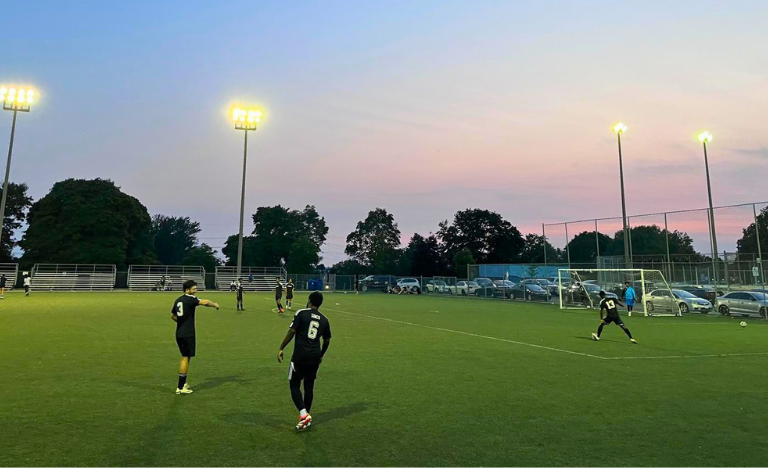
Youth who keep coming back to the soccer program can join a team that plays in a league across the city. They travel together, compete together, and build relationships that extend beyond the field.
At first, many don’t know each other, but as they begin calling for the ball, encouraging one another, they bond as a team.
Ben Dobri, a Case Manager at Covenant House Toronto and coordinator for the soccer program, remembers one young person who struggled to show up on time. “It was an ongoing thing,” he says. “But the team needed him, and they made that clear.”
He started arriving earlier and showing up consistently. That shift carried into other areas of his life—he arrived early for a housing interview, got a job, and now plays soccer at a semi-professional level. “It goes beyond skill,” Ben says. “When people are counting on you, you start to show up differently—not just here, but everywhere.”
The positive connections continue when the game ends.
“That’s what we’re trying to build,” Ben says. “A community that lasts—where young people know they have people they can call on.”
For a few hours each week, youth are free to be young. They move, laugh, and work toward something together. And for young people rebuilding their lives, that sense of belonging can be the start of something bigger—confidence, stability, and a path forward.